Today, 16 November 2023, I am in Argentina for the first time. I am currently working as a photographer for Hapag-Lloyd Cruises. If you do not know me yet, you can find out more about me here!
After setting foot in South America for the first time a week ago, today I saw penguins in the wild for the first time. Magellanic penguins, to be precise!
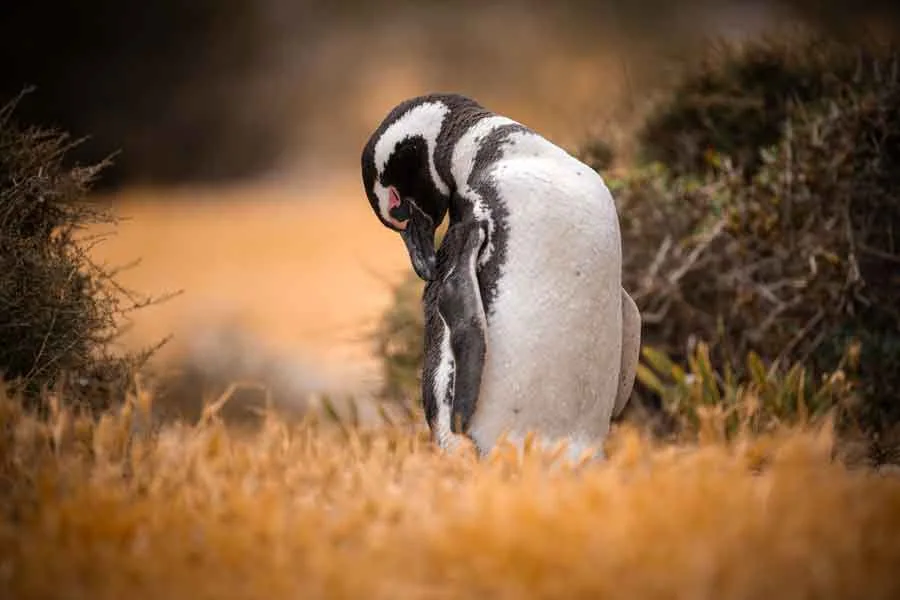
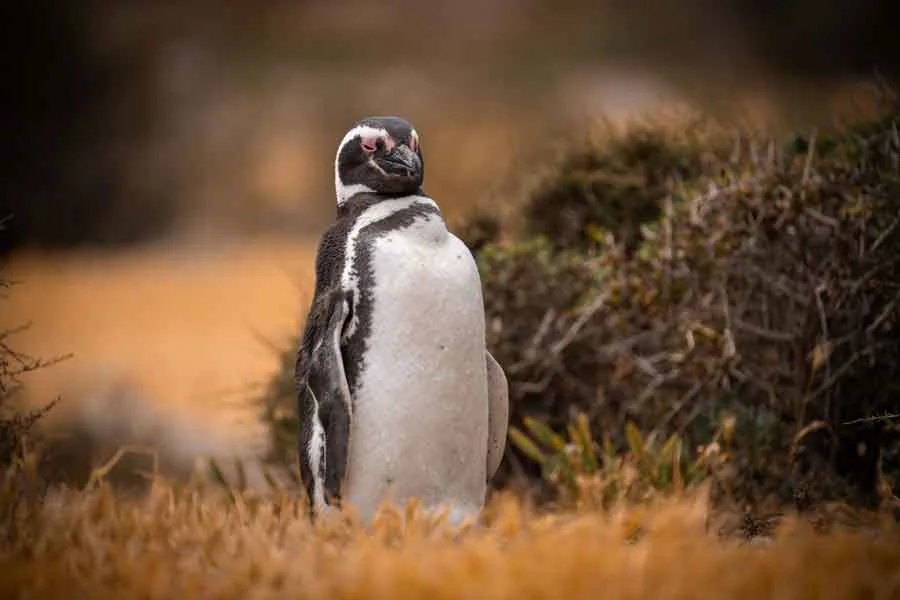
I am visiting Estancia San Lorenzo on the Valdés Peninsula, around 200 kilometres from the city of Puerto Madryn. Here, beside the beach, there is a protected penguin reserve with a population of about 600,000 penguins, including 200,000 young birds.
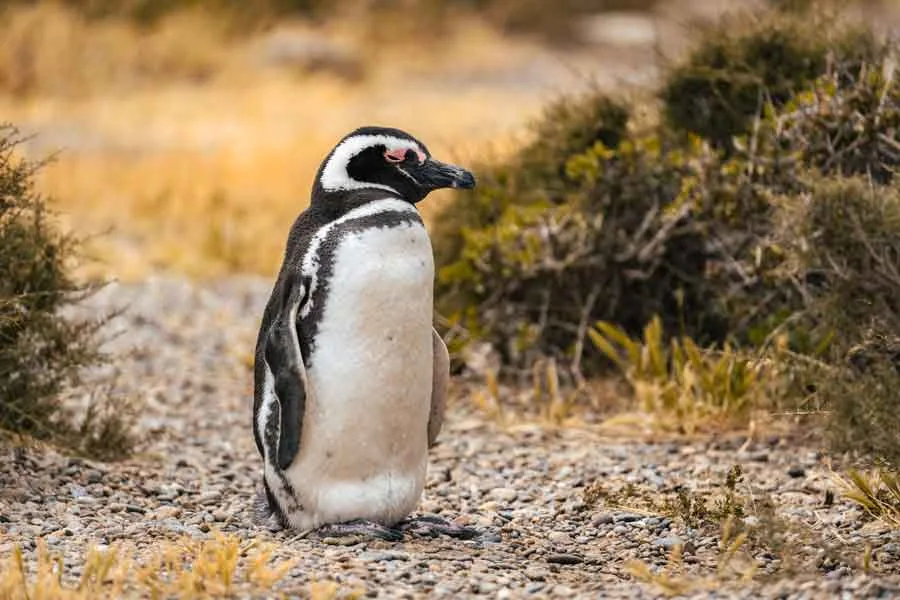
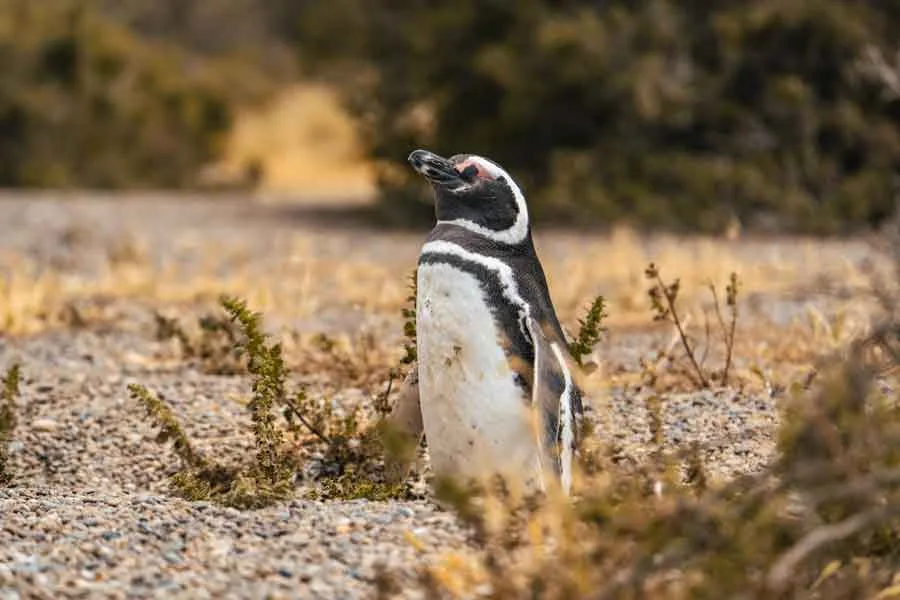
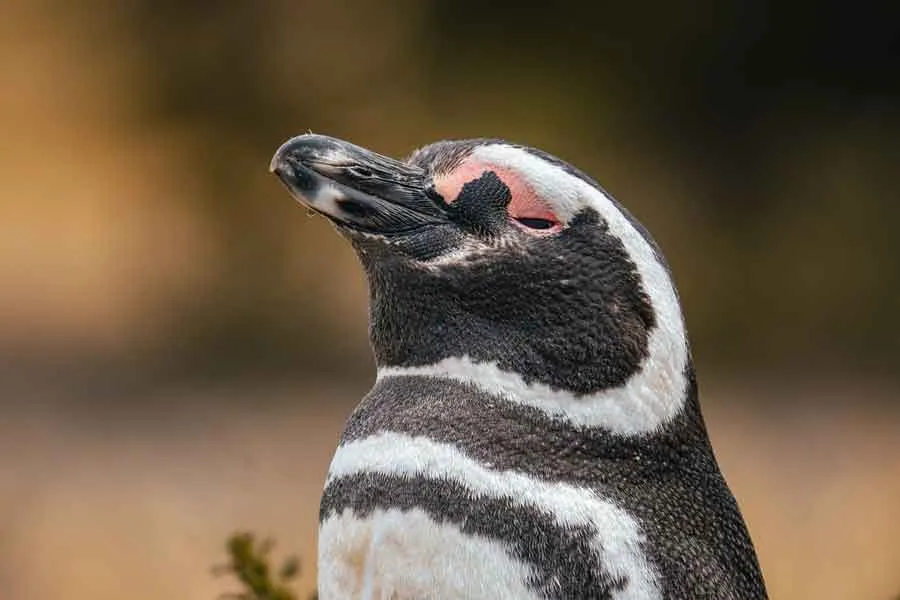
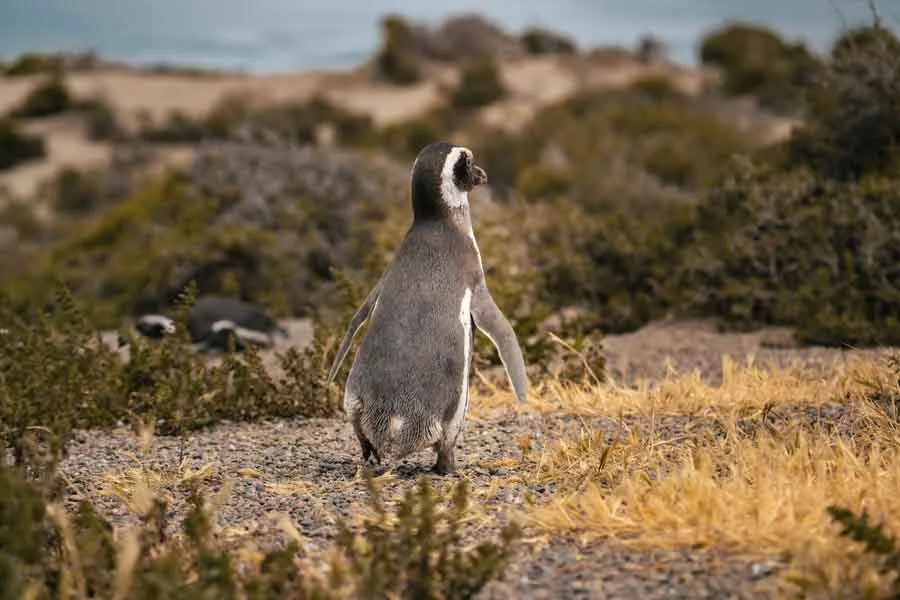
Close encounters with penguins are an everyday occurrence here. The animals are very curious and approach us of their own accord.
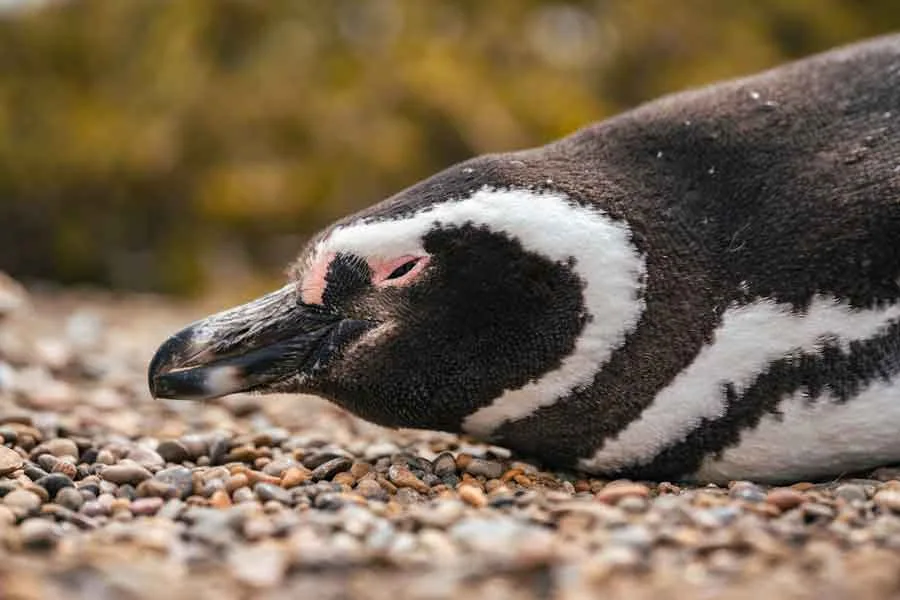
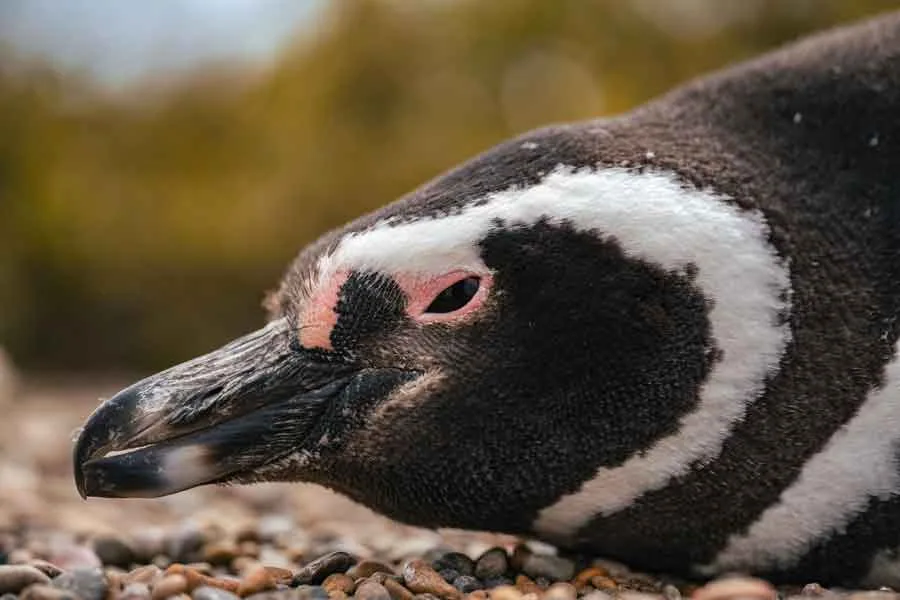
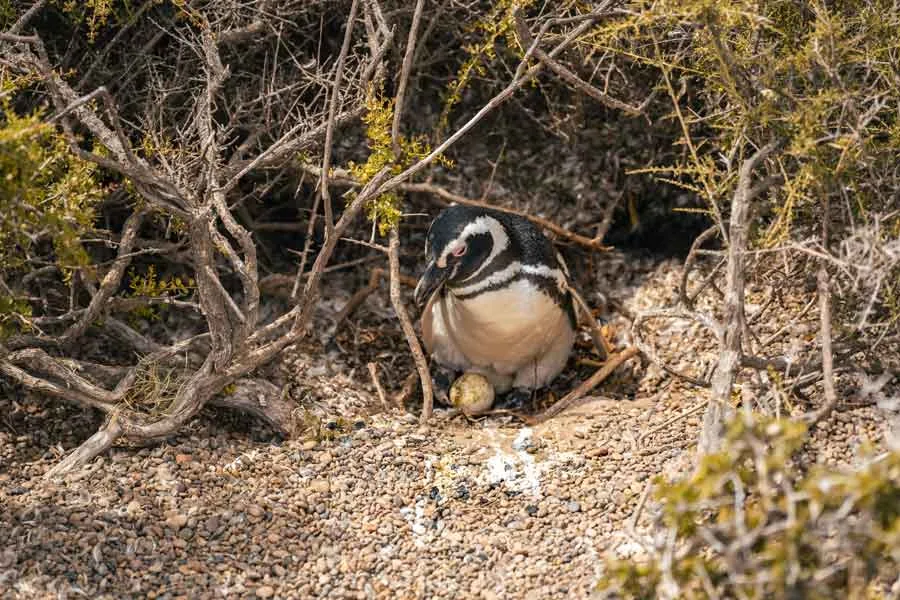
At this time of year, in November and December, the penguins incubate their eggs in small burrows, often hidden among the bushes. They lie over the eggs to keep them warm. Incubation usually takes 40–42 days.
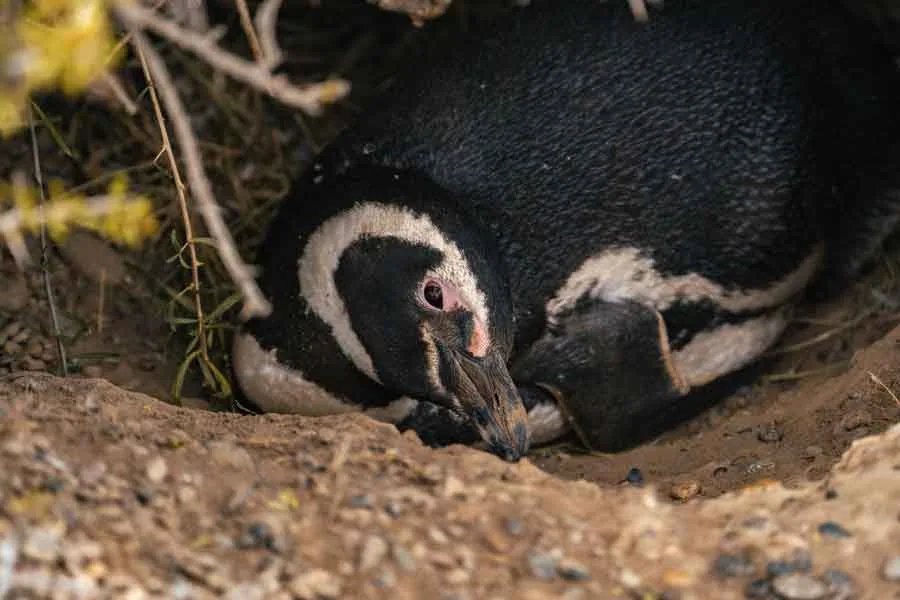
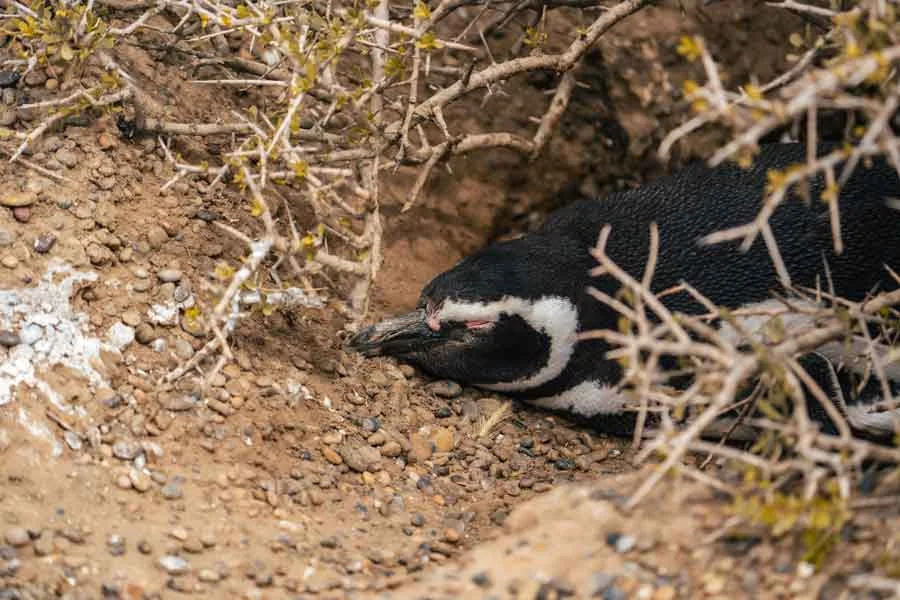
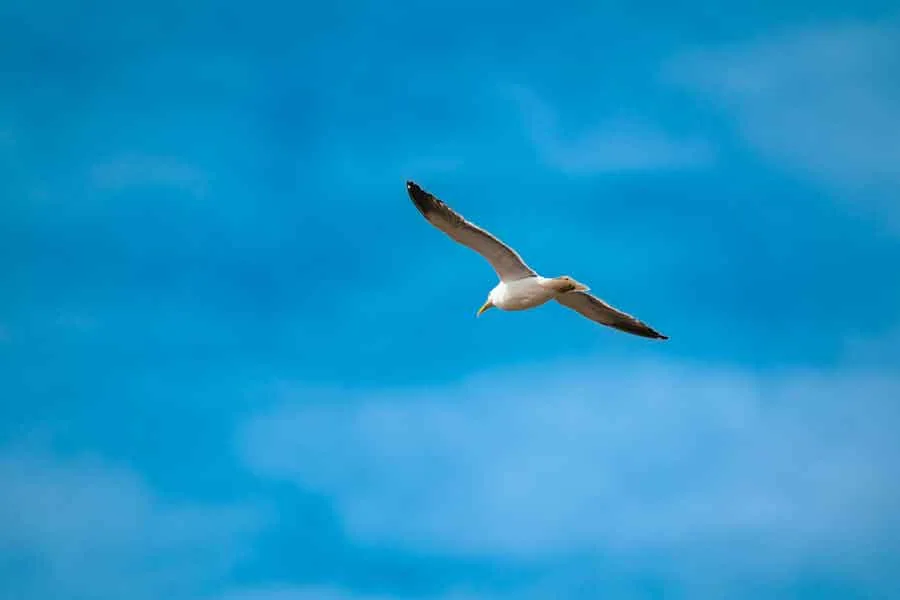
During the breeding season, the chicks' parents regularly take turns incubating so that the other parent can search for food at sea. Their self-built burrows offer protection not only from wind and weather, but also from predators such as skuas and gulls, which constantly circle above the nests and try to steal unguarded eggs.
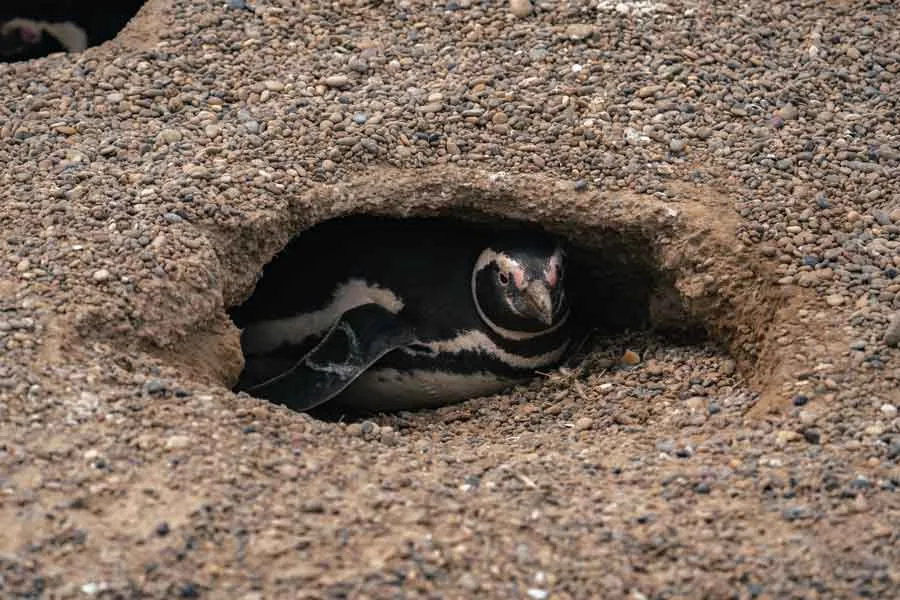
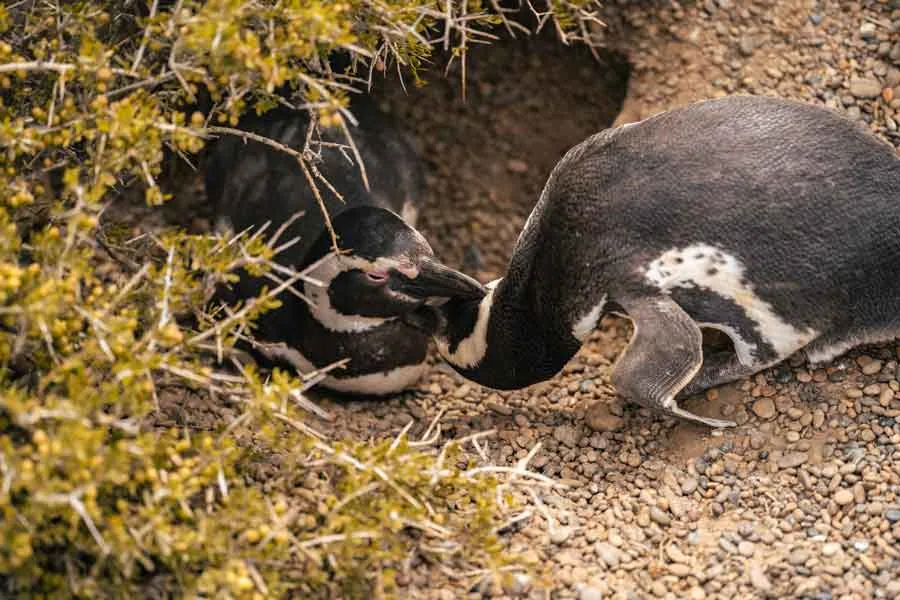
Here, I managed to catch a brief glimpse of one of the eggs.
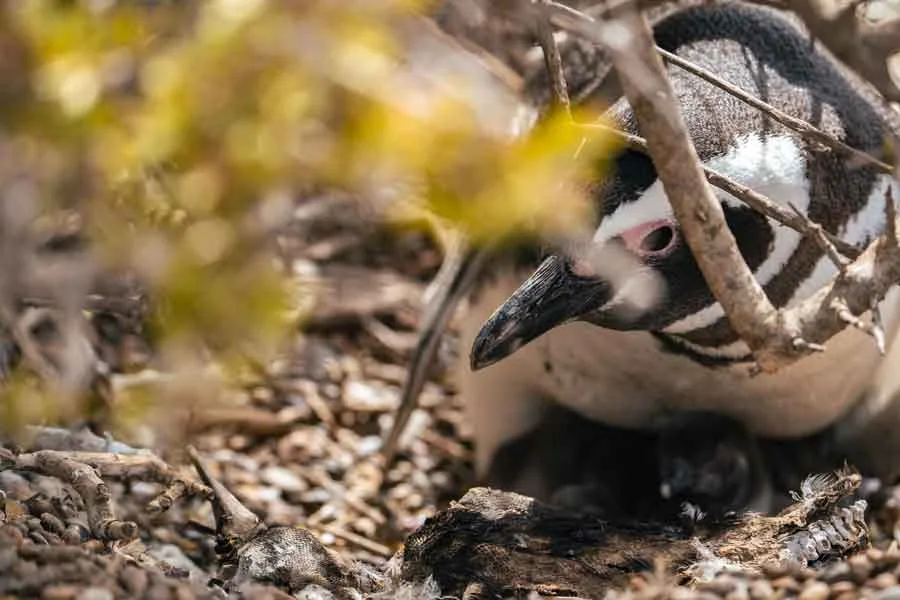
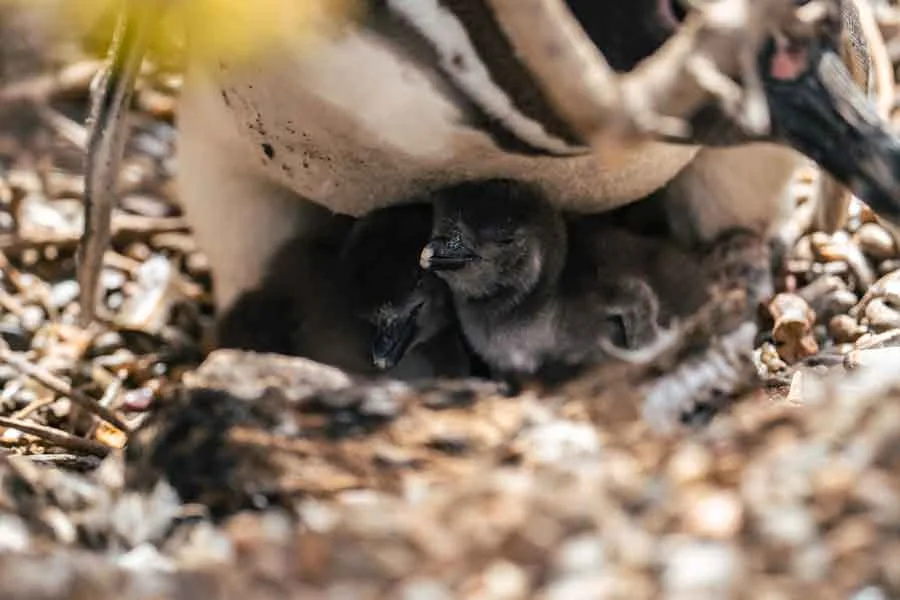
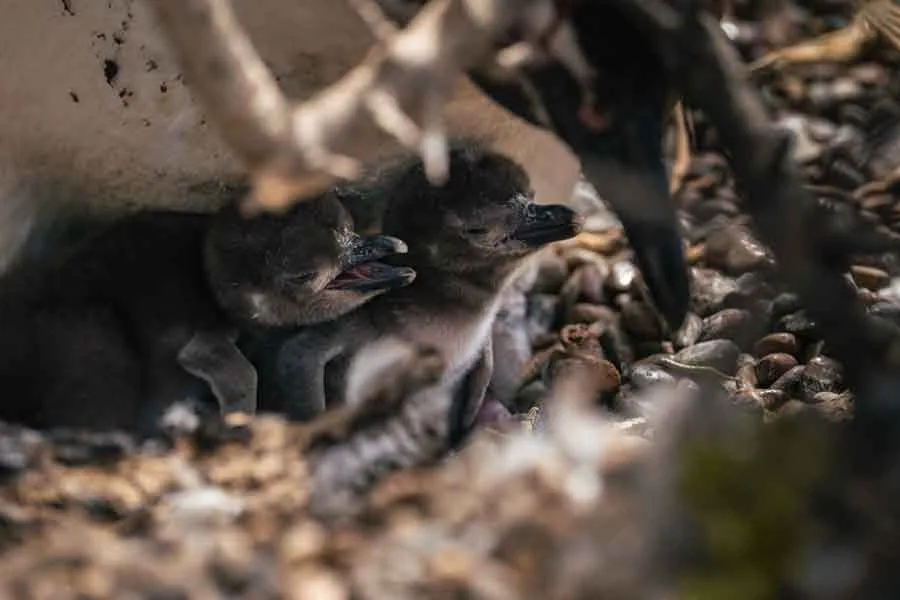
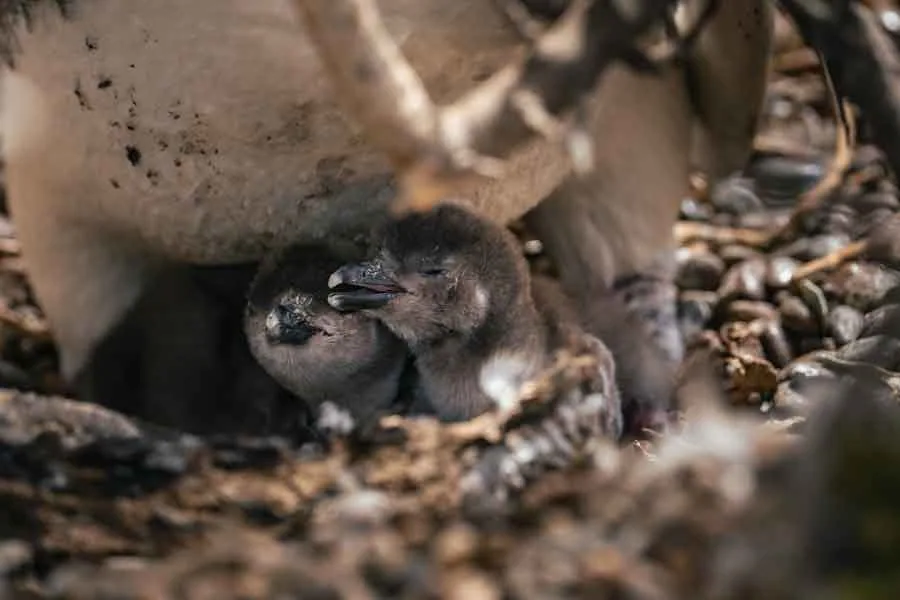
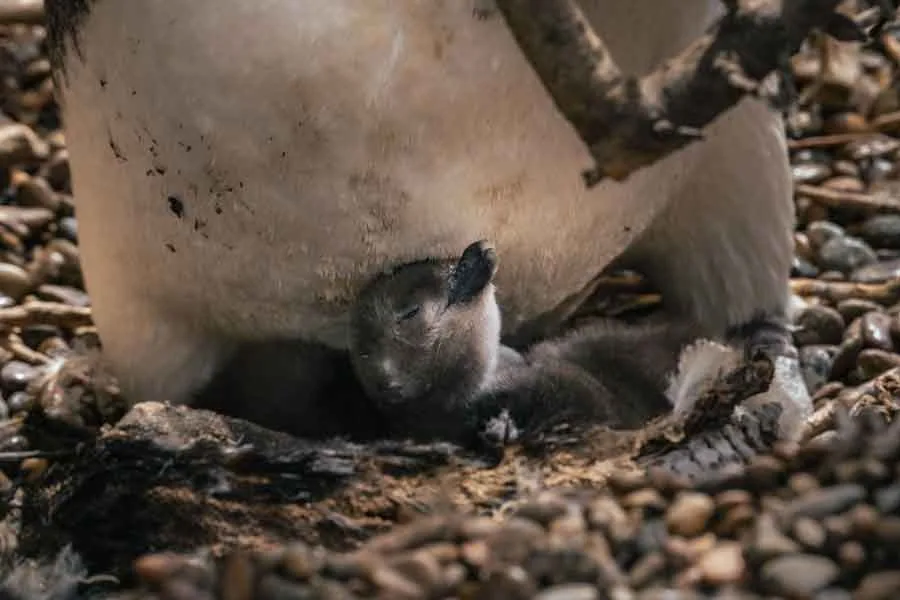
We are lucky: the first chicks hatched a few days ago and are being closely guarded by their mother. Our guide explained the following stages of the chicks' development:
- Hatching and the first plumage: the chicks hatch after an incubation period of around 40 to 42 days. In the first weeks after hatching, they are entirely dependent on their parents, who feed them regurgitated fish. During this time, the chicks have fluffy brown down.
- The first steps towards independence: after roughly a month, the chicks begin taking their first steps towards independence. They leave the nest and gather in groups known as crèches while their parents search for food.
- Changing into juvenile plumage: at around two to three months, the chicks begin losing their fluffy down and developing waterproof juvenile plumage. This process is called moulting. Once their feathers are waterproof, they start practising swimming and diving, essential skills for their independence.
- Full independence: Magellanic penguin chicks usually become independent of their parents after about three months. By then, they can swim, dive and hunt on their own.
- Reaching sexual maturity: the chicks are not fully grown straight away, however. They reach their full size and sexual maturity at around four to five years of age. By then, they have gone through several moults and acquired their adult plumage.
I hope you enjoyed my photographs and this short article! Another day at sea now awaits me before we arrive in Puerto Deseado. See you soon!